[Dit is mijn laatste essay op Substack. Wil je mijn Engelse schrijfsels blijven lezen, volg me dan op Substack en krijg artikels gratis in je inbox. Als je extra genereus wil zijn en nog geld over hebt na al je effectieve liefdadigheid (zie hieronder), kan je ook een betalende abonnee worden. 😉]
Imagine you could wave a magic wand and make one of the following (but not both) vanish from earth in an instant: extreme poverty or extreme wealth. Which would you choose? Don’t worry, nobody will get hurt in the process; we’ll just hand out or take away cash according to your choice. So, what’s it going to be: a world without billionaires or without beggars?
I really hope this isn’t a head-scratcher for you. Any morally sane person should want to eliminate extreme poverty if given the opportunity. Despite tremendous progress in combating poverty over the past decades, 800 million people are living on less than $3 per day, a miserable condition most of us can barely fathom. Ramping up efforts to eliminate poverty once and for all should be the world’s top priority.
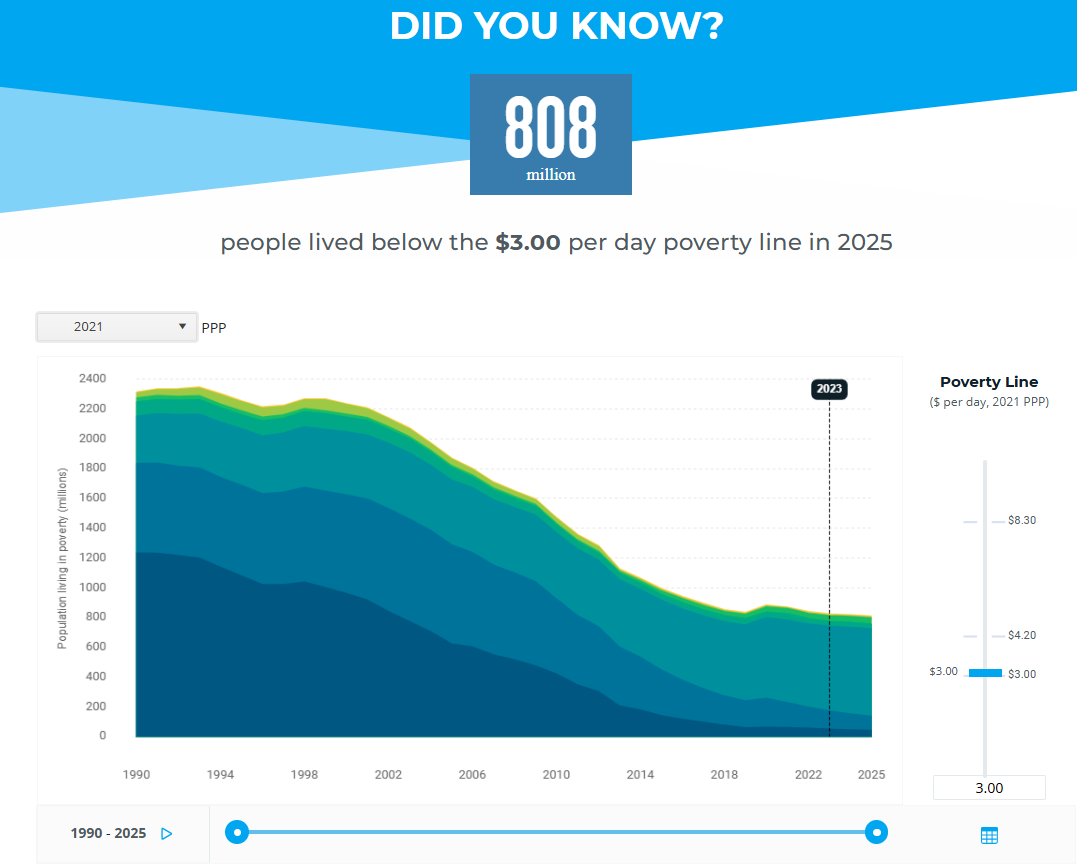
And yet, many people harbor such a visceral aversion to extreme wealth that they might hesitate when given our magic wand—or even make the wrong choice. Particularly among progressives, some behave as if extreme wealth is the greater of the two evils, and seem prepared to jeopardize the fight against poverty if only they could get rid of billionaires.
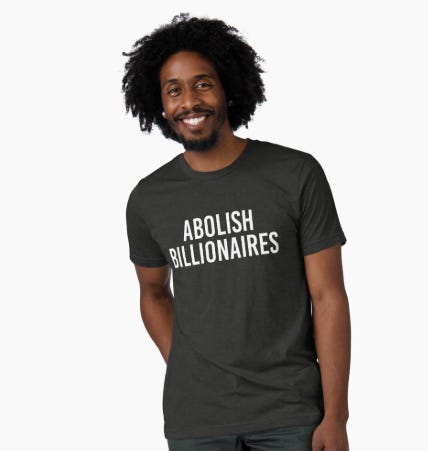
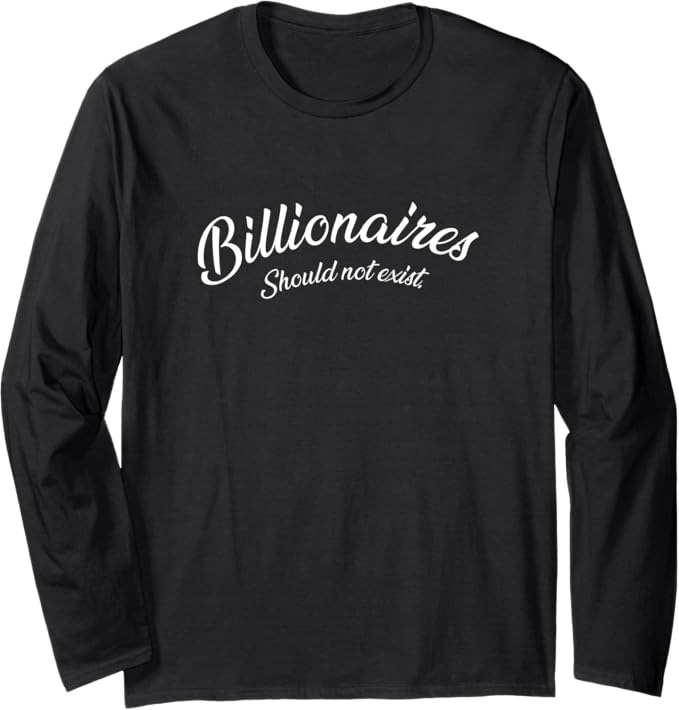
The mindset is encapsulated in slogans such as “Abolish billionaires” or “Billionaires should not exist”, which many have turned into the core of their political identity. In the words of Zohran Mamdani, the rising star on the American Left and presumtive nominee for the mayor of New York City: “I don’t think that we should have billionaires”. Yes, you can also buy T-shirts:
A slightly more subtle version was put forward by Dan Riffle, advisor to Alexandria Ocasio-Cortez: “Every billionaire is a policy failure”. And then there is the historian and best-selling author Rutger Bregman, who went viral a few years ago at Davos with his rant against billionaires and their “stupid philanthropy schemes”. Rutger’s rallying cry? “Taxes, taxes, taxes, and all the rest is bullshit”.
Well, I beg to differ. How about “Poverty, hunger, disease, and all the rest is bullshit”? Sure, government intervention provides one possible route to ending these evils, but so does private philanthropy. (Bregman himself recently wrote an inspiring book extolling effective philanthropy, I wonder if he stands by those words today.)
But can’t we just kill those two birds with one stone? What if, in the real world, abolishing extreme wealth and abolishing extreme poverty really amount to the same thing? Except it doesn’t. Contrary to deeply rooted intuitions, wealth creation is not a zero-sum game in which one person’s gain is another’s loss. In the grand sweep of history, extreme wealth and extreme poverty show an inverse relationship. The very capitalist system that slashed extreme poverty to the lowest levels ever recorded has pushed up extreme wealth to unprecedented heights. If wealth creation were truly zero-sum, we’d expect extreme poverty to rise alongside extreme wealth, but the opposite is true.
In fact, extreme wealth can be seen as a catalyst for poverty reduction: the lure of immense riches drives entrepreneurs to innovate and bring new products to market, spurring economic growth that benefits everyone. Economist William Nordhaus estimates that billionaires like Elon Musk and Jeff Bezos capture only a tiny portion (about 2%) of the surplus value generated by their technological breakthroughs—the rest is shared among us as we use their products. As
has pointed out, “we’re all billionaires now” in terms of access to technologies developed through billion-dollar investments. Today, we can buy “a pill that required $1 billion to develop for $2.00 if a billion other people have the same medical problem”.
In the grand scheme of things, this is not a bad bargain, though some very smart people seem to be confused about this. Writing in The New Republic, Yale historian Samuel Moyn lamented the inequality resulting from economic growth: “How much does it matter… that growth has skyrocketed, if the one percent captures so substantial a part of the gains?” Well, for starters, it matters immensely to the billions of people who have been lifted out of poverty thanks to that very growth. If you genuinely believe that the near eradication of poverty is not such a big deal given that some people ended up with a (much) larger slice of the pie, then you’re essentially suggesting that extreme wealth is a greater evil than extreme poverty.
The clearest sign that those advocating the abolition of billionaires don’t have their priorities straight is that they rarely pause to reflect how, once billionaires have been taxed out of existence, all those tax dollars will actually be spent. Even before Donald Trump, the U.S. allocated less than 1% of its GDP to foreign aid, and not always to the most cost-effective programs. So, what are the chances that an upcoming U.S. administration will start investing billions in the world’s poorest, even with the most progressive Democrat at the helm? Back in 2019, Bernie Sanders invited his followers to imagine a scenario where people like Bill Gates would be “taxed $100 billion”. With that money, Sanders gushed, “we could end homelessness and provide safe drinking water to everyone in this country.”
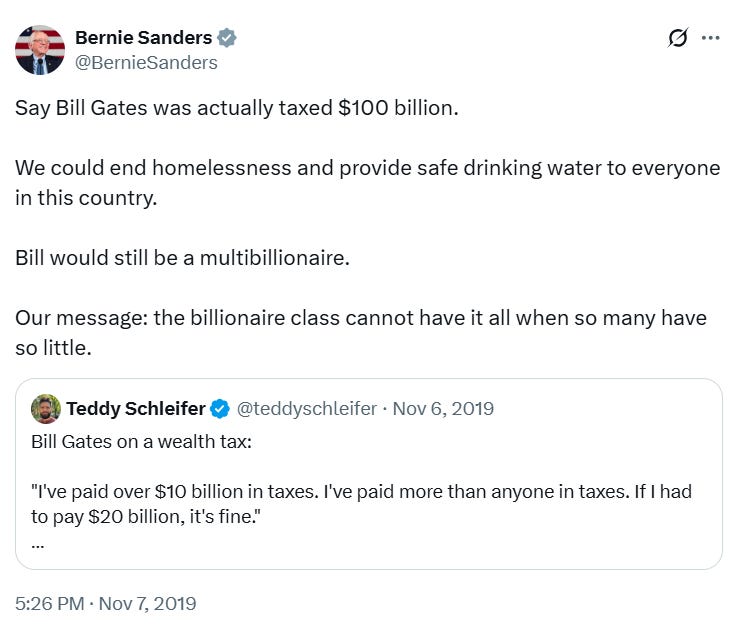
In other words, even a socialist like Sanders would channel Gates’s billions to people who are already living in one of the richest countries on earth. If that’s the plan, I’d rather have Bill Gates keep his fortune to himself and spend it as he currently does, combating neglected global causes such as malaria or tropical diarrhea in far-flung countries. The bottom line: taxes are a means to an end, not an end in themselves—unless you think eradicating extreme wealth is more important than eradicating poverty.
Another sign of skewed priorities is the often-heard view that billionaire philanthropy is merely a clever PR strategy to uphold the very system from which the super-rich profit, or to burnish their images as generous benefactors. Take Anand Giridharadas, an American writer and author of Winners Take All: The Elite Charade of Changing the World. He argues that wealthy philanthropists “seek to maintain the system that causes many of the problems they try to fix,” suggesting that “their do-gooding is an accomplice to greater, if more invisible, harm.” Now we can surely have a debate about the downsides of an economic system that allows people like Bill Gates to amass such vast wealth, but how could this ever add up to a “greater harm” than the evils Gates is helping to eradicate?
Imagine the reverse. What would we think of a radical libertarian who is bent on destroying a highly successful government initiative aimed at combating HIV and malaria in impoverished countries, simply because it bolsters the allegedly undeserved reputation of Big Government and perpetuates the “greater harm” caused by bloated bureaucracies? In fact, we don’t need to imagine this—it’s essentially what Elon Musk has been up to. According to the New York Times, the slashing of USAID funding under Muck’s short-lived DOGE has already resulted in about 300,000 deaths from HIV, malaria, tuberculosis, and malnutrition—mostly children. So, before we rush to “abolish billionaires” just because their existence rubs us the wrong way ideologically, we should stop and consider whether doing so might undermine the effective charities they support.
Of course not all billionaires are as generous and impactful as Bill Gates or Warren Buffett, but if you’re not being careful, you might end up hurting the extremely poor just to spite the extremely rich.
As Giridharadas writes, extreme wealth does have downsides for society. While it’s become trendy in academic circles to pin every conceivable social ill on inequality, often backed by shoddy theories and spurious correlations, it’s still fair to worry about the widening wealth gap and its potential to undermine democracy. Those with massive fortunes can exert disproportionate influence over election campaigns and legislation through lobbying and behind-the-scenes maneuvering.
However, many of these issues can be addressed in a more pragmatic way, such as by capping campaign donations. Even if some negative effects of extreme wealth are unavoidable, we need to consider them alongside the potential fallout from abolishing billionaires. Plus, we shouldn’t exaggerate the impact of money in elections. In the 2016 campaign, for example, Hillary Clinton spent nearly twice as much as Donald Trump—$565 million compared to his $322 million—often money donated by ultra-rich people who were afraid that Trump would behave as an unpredictable wrecking ball to the economy. But all the money in the world couldn’t buy Hillary a victory.
The most charitable version of the argument against billionaires is that the mere existence of extreme wealth is distasteful as long as others are stuck in dire poverty. In this view, extreme wealth isn’t inherently bad, but for it to exist alongside extreme poverty feels unbearable. I definitely have some sympathy for that argument. More billionaires should follow in the footsteps of Gates and Buffett and sign the Giving Pledge, a promise of the ultra-wealthy to give away at least half of their fortunes to charity during their lifetime.
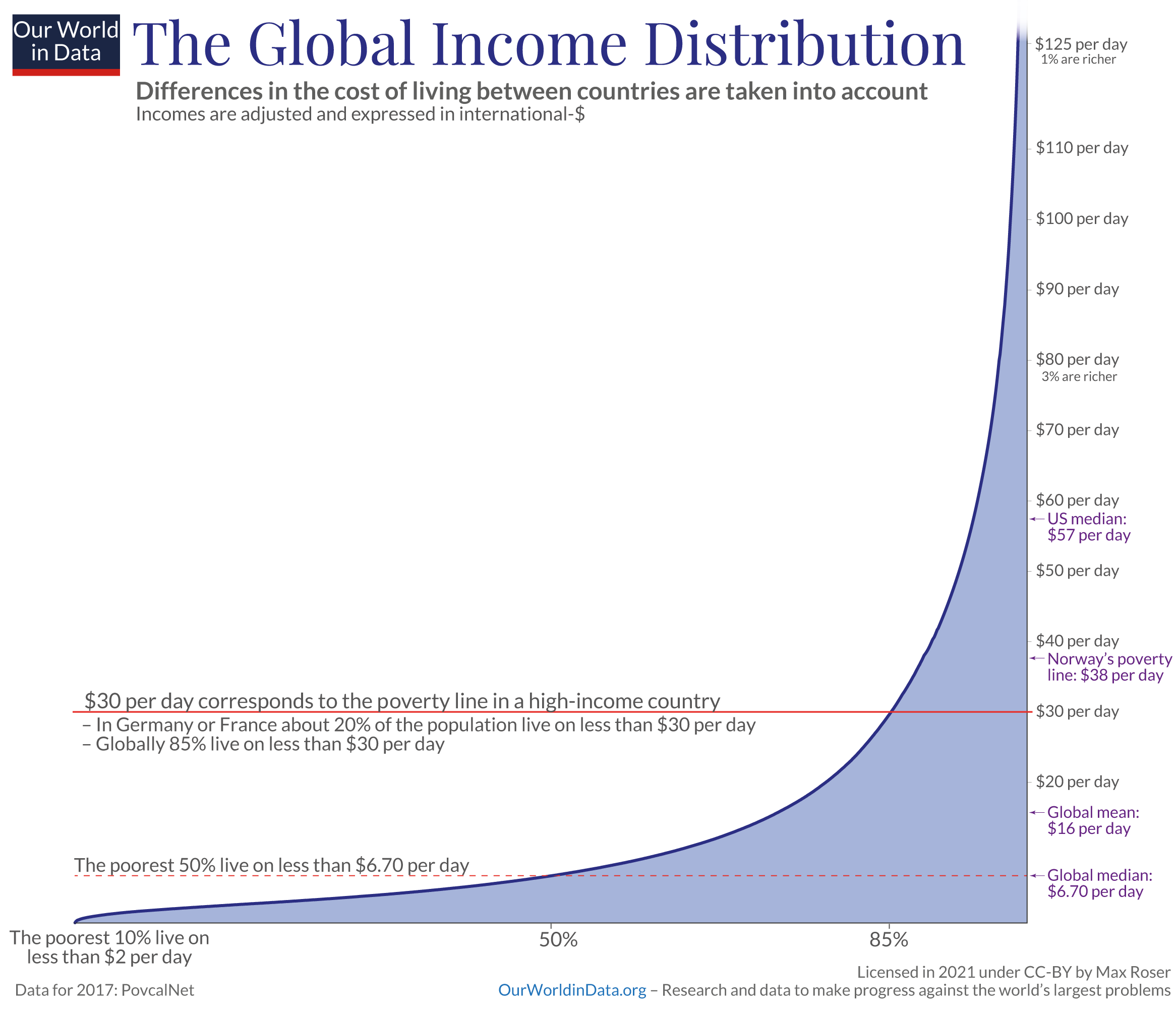
But notice that this argument carries moral weight not just for billionaires, but for the rest of us, too, as philosopher Peter Singer has argued for decades. If you’re reading this piece, chances are that you’re among the top 1% richest people on earth (or at least the top 3%), in terms of income and wealth.
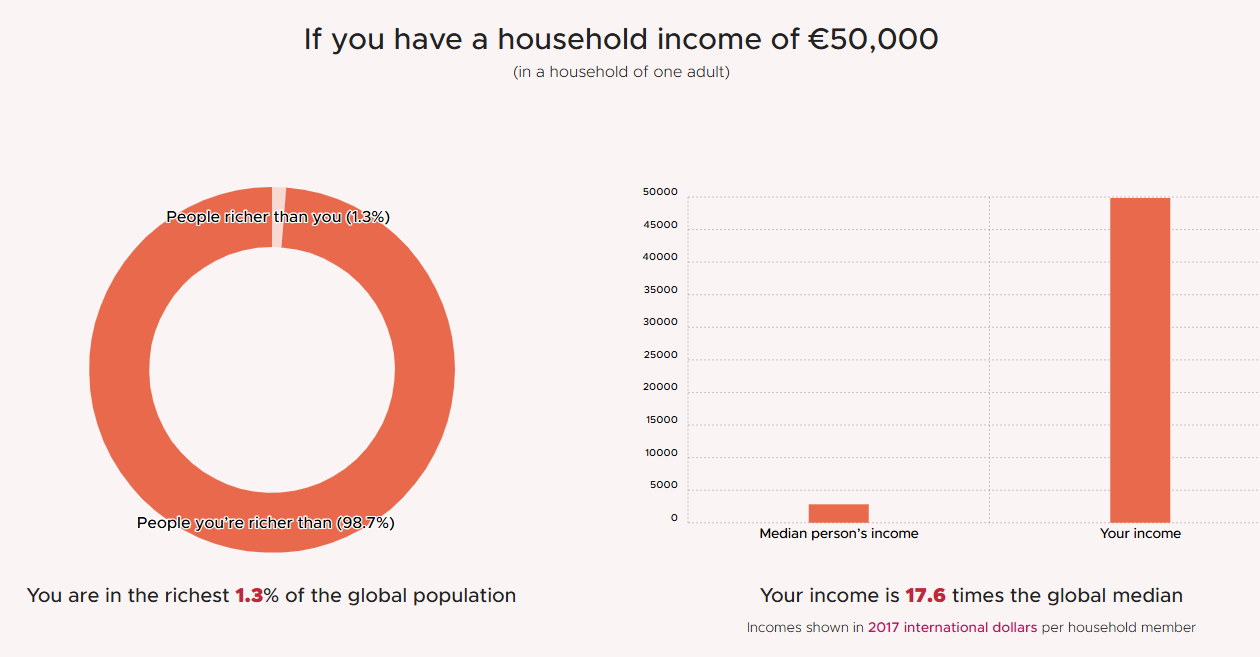
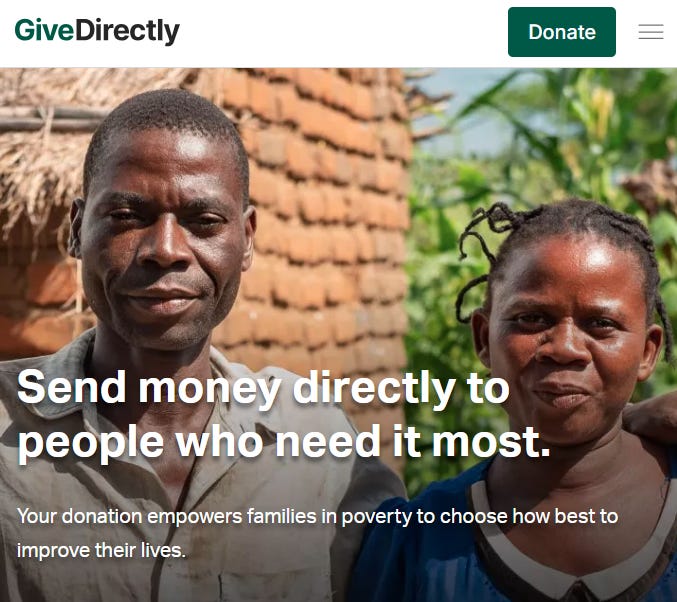
Compared to the 800 million people surviving on less than $3 per day, all of us are obscenely wealthy. Many of those who rail against “the one percent” should take a good, long look in the mirror. Even if you’re not a billionaire, you have the ability to transfer some of your wealth to the very poorest with a few clicks of the mouse, through effective programs such as GiveDirectly, which I can highly recommend.
As the late Hans Rosling wrote, our generation has the unique opportunity to end poverty once and for all: “to pick up the baton, cross the line, and raise its hands in triumph”. So, rather than raging against billionaires and waiting for the government to tax them into oblivion, why not chip in right now and make the world a little better?
If effective charities are not your cup of tea but you still have money to give away, you can also consider becoming a paid subscriber to my Substack. 😉
The next best way to support my work is just to hit the like or share button! This will help me to reach more readers.